

VeSPoTec’s Expert Panel at the IAEA General Conference
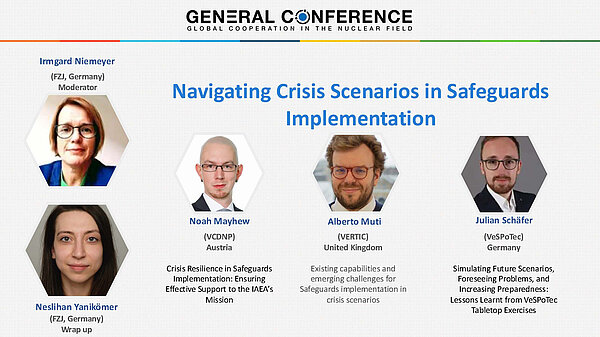
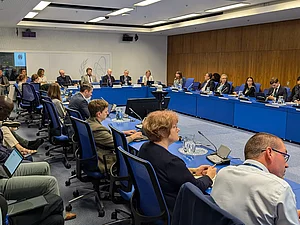
The event, titled “Navigating Crisis Scenarios in Safeguards Implementation,” assembled an expert panel to discuss strengthening IAEA safeguards in the face of crises such as armed conflicts, natural disasters, and pandemics. Nearly 50 attendees participated in this discussion on a pressing global issue.
This timely event was opened by Ambassador Rüdiger Bohn, Permanent Representative of the Federal Republic of Germany to the International Organisations in Vienna. Moderated by Dr. Niemeyer, the panel included experts from the Vienna Center for Disarmament and Non-Proliferation (VCDNP), the Verification Research, Training and Information Centre (VERTIC), and the VeSPoTec research consortium (Verification in a Complex and Unpredictable World: Social, Political, and Technical Processes). Discussions focused on practical and strategic ways to ensure the resilience of IAEA safeguards.
A central theme that emerged was the need for flexibility and adaptability. In times of crisis, a one-size-fits-all approach is ineffective. Safeguards must be dynamic, evolving with the situation while maintaining their core goal of preventing nuclear proliferation.
The panel also emphasized the psychological stress faced by inspectors and other personnel during high-pressure situations, underlining the importance of addressing this as part of strengthening safeguards.
New communication strategies that integrate all stakeholders – government officials, inspectors, and international organizations – were identified as essential. Such integration not only helps anticipate risks and vulnerabilities but also fosters the development of comprehensive solutions.
Key Insights from the Panel
Noah Mayhew from VCDNP highlighted the crucial role of cooperation from states involved in conflicts. He stressed that enhanced monitoring systems, acceptance of advanced technologies, and resilient communication infrastructure are vital, especially when physical access to nuclear sites is restricted.
Building on this, Alberto Muti from VERTIC pointed out that while crises differ – from environmental disasters to armed conflicts – they share common challenges in safeguarding nuclear materials. Disrupted monitoring and loss of access to facilities can severely weaken safeguards. Though technological innovations can bolster resilience, they require time, testing, and collaboration with states to ensure they are effective in real-world scenarios. Muti emphasized that while innovation is critical, the core practices of safeguards must remain the foundation of resilience. The IAEA must continue to innovate and adapt while preserving the integrity of its existing safeguards.
Julian Schäfer from VeSPoTec presented on the benefits of simulating crisis scenarios to identify vulnerabilities before they escalate into real threats. His presentation on the VeSPoTec Tabletop Exercise offered a glimpse into the future, where stress-testing safeguards systems under various crisis scenarios should become a key strategy for ensuring long-term resilience. Another crucial insight from the panel was the value of interdisciplinary collaboration, as crisis conditions often require expertise from different fields.
Looking Ahead: Collaboration and Innovation
In closing, the expert panel underscored that while technological advancements and simulations are critical, the future of nuclear safeguards depends on continuous adaptation, cooperation, and a shared commitment from the IAEA and its member states to tackle unforeseen challenges head-on.